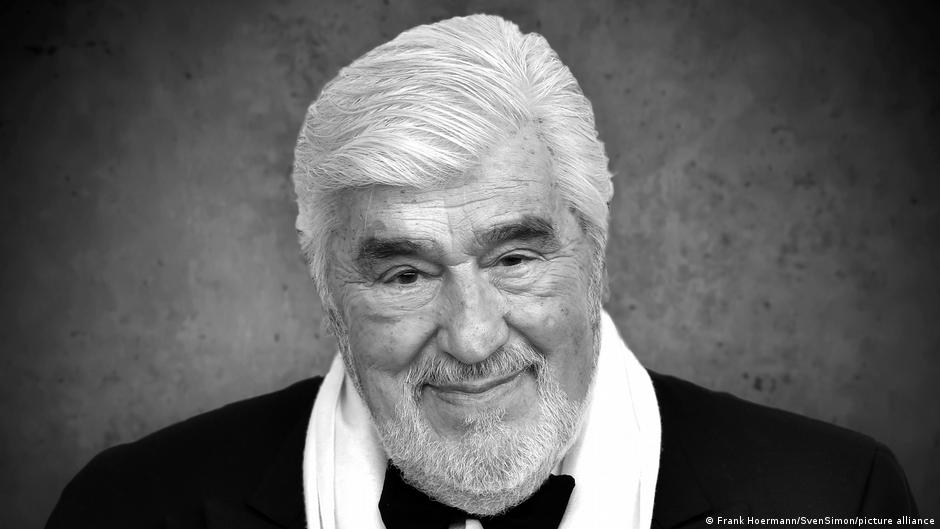
For decades, Mario Adorf has captivated audiences across Germany and internationally with his powerful performances and distinctive presence. A true titan of European cinema and theatre, his career spans an impressive array of genres and roles, making him one of the most beloved and respected actors of his generation. For those curious about the origins of this legendary artist, particularly the foundational question, Wann Ist Mario Adorf Geboren, the answer lies in a significant year that shaped much of the 20th century.
Mario Adorf was born on September 8, 1930, in Zürich, Switzerland. This pivotal date marks the beginning of a remarkable life that would see him evolve from a young man experiencing the tumult of post-World War I Europe into an acclaimed performer whose influence resonates to this day. His birth in 1930 places him among a cohort of artists and thinkers who witnessed profound global changes, experiences that undoubtedly informed the depth and nuance of his portrayals.
Understanding his birth year is crucial not just for biographical completeness, but also for appreciating the context of his formative years and the trajectory of his extraordinary career. As we delve deeper into his life and work, we uncover the multifaceted journey of an actor whose legacy continues to inspire.
The Exact Date and Place of Birth: A Swiss Beginning
The precise details of Mario Adorf's birth—September 8, 1930, in Zürich, Switzerland—offer valuable insights into his identity and early life. Born in the vibrant, neutral city of Zürich, Adorf emerged into a world teetering on the brink of significant historical upheaval. Switzerland, known for its cultural diversity and strategic position in Europe, provided a unique backdrop for his early childhood, which unfolded during the 1930s. His youth, set against the tumultuous 1940s, would have been profoundly impacted by the shadow of World War II, even from a neutral perspective.
Adorf's heritage is notably rich, being a German-Italian actor. This dual nationality speaks to a broader European identity, which he masterfully brought to many of his roles, often portraying characters with complex backgrounds and motivations. The precise answer to Wann Ist Mario Adorf Geboren - Article 1 confirms this date and location, emphasizing the foundational elements of his persona.
This early exposure to a rich cultural tapestry, combined with witnessing a world in flux, undoubtedly contributed to his remarkable ability to embody a vast spectrum of human experience on screen and stage. His Swiss birthplace also highlights the pan-European nature of his appeal, as he effortlessly transitioned between German, Italian, and international productions throughout his career.
A Life Spanning Decades: Mario Adorf's Era and Contemporaries
Mario Adorf's birth year, 1930, places him squarely in a generation that would profoundly shape the cultural landscape of the latter half of the 20th century. Born in the first half of the 20th century, specifically between the two World Wars, he came of age during a period of immense change and reconstruction. This era produced many iconic figures whose influence is still felt today.
Remarkably, Mario Adorf shares his birth year with several other global cinematic legends, underscoring the extraordinary talent that emerged during this time. Peers like Clint Eastwood, Sean Connery, Gene Hackman, and Maximilian Schell were also born in 1930, forming a cohort of actors who would collectively define an era of filmmaking. This shared birth year highlights a generation of performers who brought a new intensity and realism to the screen, often having experienced historical events firsthand that fueled their art.
Beyond cinema, Adorf's generation also included significant figures like Liselotte Pulver (born 1929) in acting and Hans Küng (born 1928), a renowned theologian, showcasing the breadth of talent that emerged from this period. To understand Mario Adorf's lasting impact, it's essential to recognize the historical and cultural context into which he was born and the company he kept, both professionally and generationally.
From Stage to Silver Screen: Adorf's Enduring Legacy
Mario Adorf's career is a testament to versatility and dedication, beginning in the late 1940s with formative experiences in various theatre productions. These early forays into the dramatic arts laid a robust foundation for his eventual transition to film in the 1950s. His ability to inhabit a wide array of roles, from gritty villains to complex anti-heroes and even comedic figures, quickly earned him acclaim and a special place in the hearts of his audience. His mastery of his craft is a key reason why discussions about Wann Ist Mario Adorf Geboren - Article 2 often lead to explorations of his expansive filmography.
Adorf's filmography is a rich tapestry of German and international productions that became critical and commercial successes. Some of his most celebrated works include:
- "08/15" (1954/55): One of his early breakthroughs, establishing him as a significant presence in German cinema.
- "Der Hauptmann von Köpenick" (1956): Adorf's masterful interpretation of Wilhelm Voigt showcased his dramatic range, earning critical praise.
- "Die verlorene Ehre der Katharina Blum" (The Lost Honour of Katharina Blum, 1975): A powerful adaptation that highlighted his capacity for intense, character-driven roles.
- "Die Blechtrommel" (The Tin Drum, 1978): An internationally acclaimed film that brought him global recognition and cemented his status as a leading actor.
- "Kir Royal" (1986): A memorable television series where his role contributed significantly to its cult status.
- "Momo" (1986): Demonstrating his range, he also ventured into family-friendly fantasy.
- "Rossini" (1997): A later career highlight, showcasing his enduring talent and comedic timing.
- "Der Bockerer": A pivotal work in his oeuvre, illustrating his capacity for poignant and historical portrayals.
- "Die Geister, die ich rief" (1982): Here, Adorf demonstrated his impressive comedic skills, proving his ability to deliver humor with perfect timing.
His versatile character roles, whether infused with deep emotional intensity or brilliant humor, allowed him to carve out a distinctive niche. He was not just an actor but a transformative artist, capable of bringing complex personalities to life with authenticity and conviction. This enduring influence on the German film industry has been recognized through numerous accolades, including the prestigious German Film Award and the Bambi, underscoring his tireless contributions to the art form.
Tips for Appreciating Adorf's Versatility:
- Explore Different Genres: Don't limit yourself to his dramas. Seek out his comedies and lighter roles to fully grasp his range.
- Watch Early vs. Late Career Films: Compare his performances in "08/15" with "Rossini" to see his evolution as an actor over decades.
- Focus on Character Nuance: Pay attention to the subtle choices Adorf made in his portrayals – how he used body language, voice, and facial expressions to convey deep emotion or humor.
Beyond the Camera: Adorf's Literary and Cultural Contributions
Mario Adorf's artistic reach extends far beyond his celebrated film and theatre performances. His profound engagement with the cultural landscape is further highlighted by his significant contributions to literature and other art forms. This multifaceted talent truly underscores his position as a cultural icon rather than just an actor.
He has authored several autobiographies, which offer invaluable insights not only into his personal journey but also his unique perspectives on the craft of acting, the evolution of cinema, and the cultural shifts he witnessed throughout his long life. These literary works provide a deeper understanding of the man behind the memorable roles, revealing his philosophical thoughts, challenges, triumphs, and the experiences that shaped his artistic vision. Reading his autobiographies is a practical tip for any aspiring actor or film enthusiast, offering a masterclass in dedication and self-reflection.
Adorf's ability to articulate his life and artistic philosophy through writing further cements his legacy as a comprehensive artist. His stories, told in his own words, illuminate the rigorous demands of his profession and the joy he found in storytelling. They serve as a bridge between his public persona and his private reflections, enriching our appreciation for his contributions. These literary endeavors confirm that the influence of an artist born on September 8, 1930, continues to ripple through various cultural domains.
Conclusion
The question, Wann Ist Mario Adorf Geboren, reveals not just a date, but the genesis of a monumental career that has profoundly shaped German and international cinema. Born on September 8, 1930, in Zürich, Switzerland, Mario Adorf emerged into a world in flux, a dynamic environment that perhaps fostered the versatility and depth for which he is renowned. His journey from the stage in the late 1940s to becoming a celebrated actor in countless film masterpieces, alongside contemporaries like Clint Eastwood and Sean Connery, speaks volumes about his enduring talent.
Through his compelling dramatic roles, his surprising comedic timing, and his significant literary contributions, Mario Adorf has established himself as far more than an actor; he is a cultural institution. His life and work serve as an inspiring testament to dedication, artistic integrity, and the power of storytelling. As he continues to celebrate milestones, his legacy lives on, inspiring new generations and reminding us of the profound impact a single artist can have on the world of film and beyond.