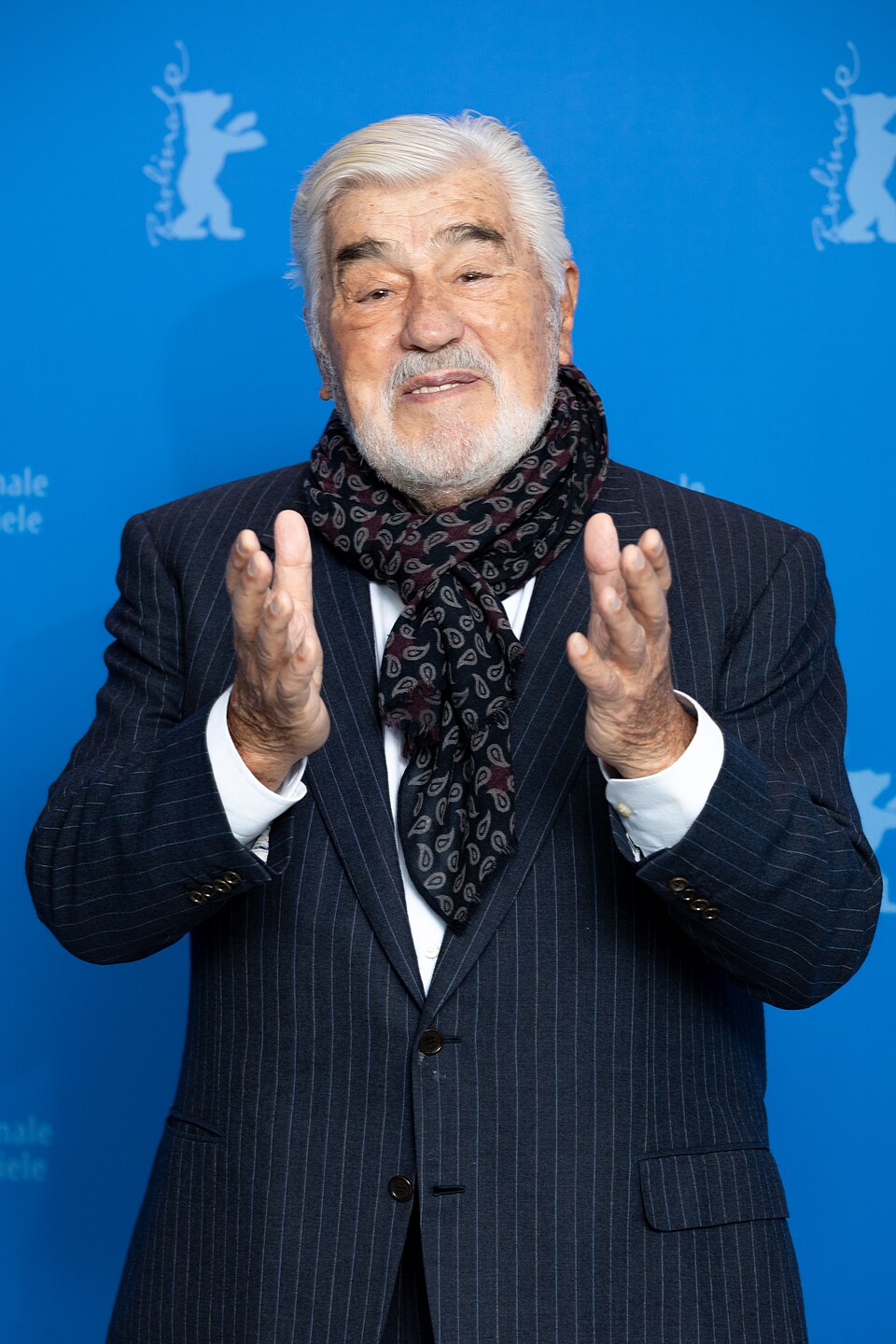
Wann Ist Mario Adorf Geboren? Unraveling the Birthdate of a German-Italian Acting Legend
For fans and film enthusiasts eager to pinpoint the origins of a true cinematic icon, the question "Wann ist Mario Adorf geboren?" holds significant importance. Mario Adorf, a name synonymous with versatility and a captivating screen presence, has left an indelible mark on German and international cinema. His birthdate is not just a mere fact; it's a marker that grounds his extraordinary journey in the annals of 20th-century history.
Mario Adorf was born on
September 8, 1930, in Zürich, Switzerland. This specific date places him firmly in a pivotal era, between the two World Wars, and makes him a contemporary of many other global legends. As of 2024, Mario Adorf is still active and poised to celebrate his 96th birthday in 2026, a testament to his enduring spirit and remarkable longevity in an ever-evolving industry. His life, spanning nearly a century, mirrors the dynamic changes of modern European history, providing a rich backdrop for his multifaceted career. For a more detailed look at his early life and how it shaped his career, you might want to explore
Wann Ist Mario Adorf Geboren - Article 1.
A Life Forged in the 20th Century: Early Years and Influences
Mario Adorf's birth in 1930 placed him in a generation that witnessed profound global shifts, including economic depressions, rising political tensions, and the dramatic aftermath of World War II. Born in the vibrant city of Zürich, Switzerland, Adorf carries a rich heritage, being of German and Italian descent. This bicultural background likely contributed to his ability to portray a wide array of characters with authentic depth and nuance, bridging cultural divides on screen.
His formative years during the 1930s and his youth in the 1940s were spent amidst these turbulent times. This period of historical flux undoubtedly shaped his worldview and, consequently, his artistic expression. He began his foray into the performing arts in the late 1940s, engaging with various theater productions. These crucial early experiences on stage laid the essential groundwork for what would become an illustrious career. The raw, immediate nature of theater allowed him to hone his craft, develop a powerful stage presence, and delve deep into character interpretation before making his cinematic debut in the 1950s.
Interestingly, Mario Adorf shares his birth year with several other iconic figures who would also go on to define global cinema. Esteemed actors like Clint Eastwood, Sean Connery, Gene Hackman, and Maximilian Schell were all born in 1930. This shared birth year places Adorf within a distinguished cohort of performers who collectively shaped the golden age of film, each contributing their unique talents to the international stage. His contemporaries within the German-speaking world included figures like Liselotte Pulver (born 1929) and Hans Küng (1928–2021), highlighting the vibrant intellectual and artistic climate into which he was born.
A Diverse Repertoire: Mario Adorf's Iconic Filmography
Mario Adorf's journey from regional theater to international film star is characterized by an astonishing versatility and an unwavering commitment to his craft. His ability to inhabit dramatically diverse roles, from gritty soldiers to complex villains and charming rogues, cemented his status as one of Germany's most influential actors. His filmography reads like a historical overview of significant German cinema, showcasing his profound impact across decades.
Among his earliest notable appearances was in the seminal German production
08/15 (1954/55), a multi-part film that captured the post-war German psyche. This role, early in his career, already hinted at the dramatic intensity he would bring to his performances. As his career progressed, Adorf became a sought-after talent, recognized for his capacity to infuse even supporting roles with memorable presence.
Some of his most celebrated works include:
- Die verlorene Ehre der Katharina Blum (The Lost Honour of Katharina Blum, 1975): A powerful adaptation of Heinrich Böll's novel, where Adorf's performance contributed to the film's critical acclaim and its sharp commentary on media ethics.
- Die Blechtrommel (The Tin Drum, 1978): This Oscar-winning masterpiece, based on Günter Grass's novel, featured Adorf in a pivotal role, further solidifying his international recognition and the film's place in cinematic history.
- Kir Royal (1986): A cult classic television series that satirized the Munich high society, showcasing Adorf's lighter, more comedic side while still delivering sharp character portrayals.
- Momo (1986): Adorf lent his voice and talent to this adaptation of Michael Ende's beloved fantasy novel, appealing to a younger audience and demonstrating his breadth.
- Rossini (1997): A witty and poignant film about the Munich restaurant scene, in which Adorf delivered a memorable performance as one of the eccentric characters.
Beyond these, Adorf demonstrated his dramatic brilliance in films like
Der Hauptmann von Köpenick (The Captain of Köpenick, 1956), where his masterful interpretation of Wilhelm Voigt garnered widespread praise. His ability to convey deep emotional intensity and a profound understanding of the human condition in such roles became a hallmark of his acting style.
Yet, Adorf was not limited to heavy dramas. He also excelled in comedic roles, proving his exceptional talent for humor and timing. In films like
Die Geister, die ich rief (The Ghosts I Called, 1982), he showcased a natural comedic flair that captivated audiences, highlighting his true versatility. This unique blend of dramatic power and comedic timing is what made him such a compelling and beloved figure on screen.
His influence was recognized with numerous accolades, including the prestigious Deutscher Filmpreis (German Film Award) and the Bambi, underscoring his tireless dedication and significant contributions to the film industry. For more insights into his most iconic performances and the impact they had, consider reading
Wann Ist Mario Adorf Geboren - Article 3.
Beyond the Camera: Literature, Stage, and Lasting Impact
Mario Adorf's artistic contributions extend far beyond his captivating film roles. He cultivated a significant presence in literature and stage acting, further cementing his status as a comprehensive cultural figure. His forays into writing, particularly his autobiographies, offer unique insights not only into his personal life and career but also into his profound reflections on art, acting, and the broader cultural landscape he navigated. These literary works serve as valuable documents, enriching our understanding of the man behind the diverse characters.
His autobiographies delve into his early years in Switzerland, the challenges and triumphs he encountered throughout his long and distinguished career, and his philosophies on life and performance. They reveal a thoughtful, articulate individual whose experiences shaped his artistic perspective. This literary output showcases a depth that complements his screen persona, proving him to be more than just an actor, but a storyteller in the truest sense.
Moreover, his continuous engagement with stage productions throughout his career underscores his passion for the foundational art of acting. The immediacy and challenge of live theater allowed him to maintain a direct connection with the craft, enriching his performances in film. This commitment to diverse artistic avenues highlights his holistic approach to his profession.
Mario Adorf's unparalleled ability to portray complex characters with authenticity and depth has made him an enduring role model for countless aspiring actors. His career trajectory, marked by longevity, versatility, and critical acclaim, offers valuable lessons in dedication, adaptability, and the importance of continuously honing one's craft. His legacy is not merely preserved in the extensive filmography he leaves behind, but also in the inspiration he provides to new generations of performers who aspire to emulate his artistic integrity and profound influence.
Conclusion
In conclusion, the answer to "Wann ist Mario Adorf geboren?" is
September 8, 1930, in Zürich, Switzerland. This birthdate marks the beginning of a life that would profoundly shape German and international cinema. Mario Adorf's journey from a child born between the World Wars to a celebrated actor, author, and cultural icon is a testament to his extraordinary talent, versatility, and enduring passion for the arts. His rich filmography, characterized by memorable performances in both dramatic and comedic roles, coupled with his literary contributions, ensures that his legacy continues to inspire and entertain audiences worldwide. As he approaches his 96th birthday, Mario Adorf remains a towering figure, his work a vibrant thread in the tapestry of modern entertainment history.